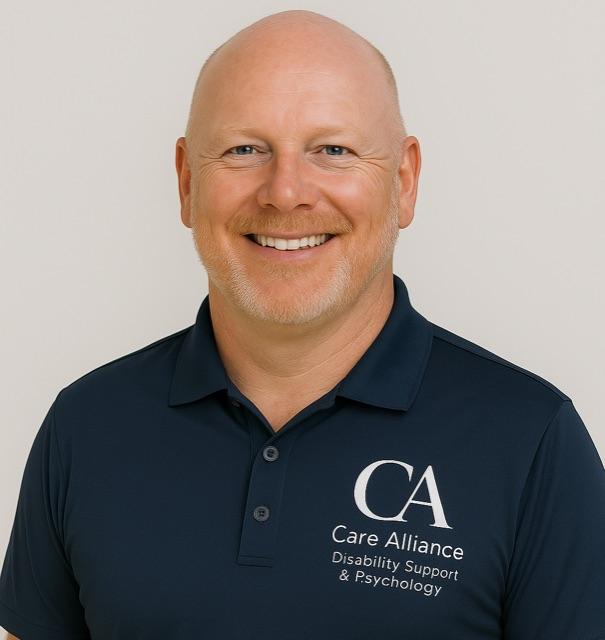

NDIS psychology is assessment and therapy delivered by a registered psychologist to support mental health, emotional wellbeing, coping and behaviour. For NDIS participants it commonly covers therapy for anxiety, depression, trauma and adjustment, along with cognitive and psychosocial assessments that inform the rest of a person's supports.
At a glance
- AHPRA-registered psychologists
- No GP referral needed for NDIS-funded psychology
- At our Charlestown clinic, in your home, or by telehealth
- CBT, ACT, DBT and other evidence-based approaches, matched to each person
- Support with autism, complex PTSD, anxiety, mood, sleep, confidence and life transitions
- The same psychologist each time, wherever we can
- Funded through the NDIS (commonly Improved Daily Living), iCare, DCJ, Medicare where applicable, or privately
Watch · 19 seconds
Psychology that fits your life
A short animation: where our registered psychologists work with you, and seeing the same psychologist each time.
Request a call backRead the transcript
Psychology that fits your life.
Our registered psychologists work with you at our Charlestown clinic, in your home, by telehealth, or on a walk in the park or along the beach.
The same psychologist each time.
Care Alliance. Call 1300 206 309.
Capacity building at the core
A key focus of our psychology services is capacity building — supporting participants to develop emotional regulation, communication skills, self-awareness, coping strategies, resilience and greater functional independence.
We support participants experiencing a range of presentations, including Autism Spectrum Disorder, Complex PTSD, anxiety, mood-related difficulties, sleep concerns, reduced confidence and self-worth, life transitions, and challenges with relationships, communication and daily functioning.
Evidence-based approaches
Our psychologists draw from a range of evidence-based approaches, tailored to what is clinically appropriate for each person:
- Cognitive Behavioural Therapy (CBT)
- Acceptance and Commitment Therapy (ACT)
- Dialectical Behaviour Therapy (DBT)
- Solution-Focused Therapy
- Mindfulness and strengths-based approaches
- Schema Therapy and Neuropsychotherapy where clinically appropriate
In clinic, in your home, or by telehealth
Psychology supports can be delivered at our welcoming Charlestown clinic, in the participant's home anywhere across Newcastle, Lake Macquarie and the wider Hunter, or by telehealth — offering flexibility based on individual needs and preferences.
Our goal is to help participants build practical skills, strengthen wellbeing, improve daily functioning, increase independence and work towards meaningful outcomes aligned with their NDIS goals.
Common questions
Do I need a referral to see a Care Alliance psychologist?
No GP referral is required for NDIS-funded psychology. You can enquire directly through our referral form or by calling 1300 206 309, and our intake team will talk you through availability and next steps.
Where are sessions held?
Three ways, and you can mix them: at our Charlestown clinic, in your own home or community across Newcastle, Lake Macquarie, Maitland, Cessnock, Port Stephens and the Central Coast, or by telehealth. Whichever suits you best, and it can change as your circumstances do.
Do you offer psychology by telehealth?
Yes. Telehealth suits some people very well - it removes travel, it can be easier if leaving the house is hard, and it makes a consistent fortnightly session realistic when getting to a clinic is not. It does not suit everyone or every piece of work, so we will be honest with you about when in-person is the better call.
What can NDIS psychology help with?
Emotional regulation, anxiety, mood, trauma including Complex PTSD, sleep, confidence and self-worth, life transitions, and the communication and relationship difficulties that often sit alongside disability. The focus is capacity building - practical skills that change daily life, not therapy for its own sake.
How is psychology funded in an NDIS plan?
Usually from the Capacity Building budget, in the therapy category commonly called Improved Daily Living. Our intake team will check what your plan holds before anything starts. We also see clients funded through iCare, DCJ, Medicare where applicable, and privately.
Will I see the same psychologist each time?
Yes, wherever we can. Continuity matters more in psychology than in almost any other support, so we match you to a psychologist and keep you with them rather than rotating whoever is free.
Is there a waitlist for psychology?
It changes, so rather than a stale answer here we publish a live capacity board showing which services are accepting referrals and any honest wait times. Ask us and we will tell you straight rather than taking a referral we cannot start.