
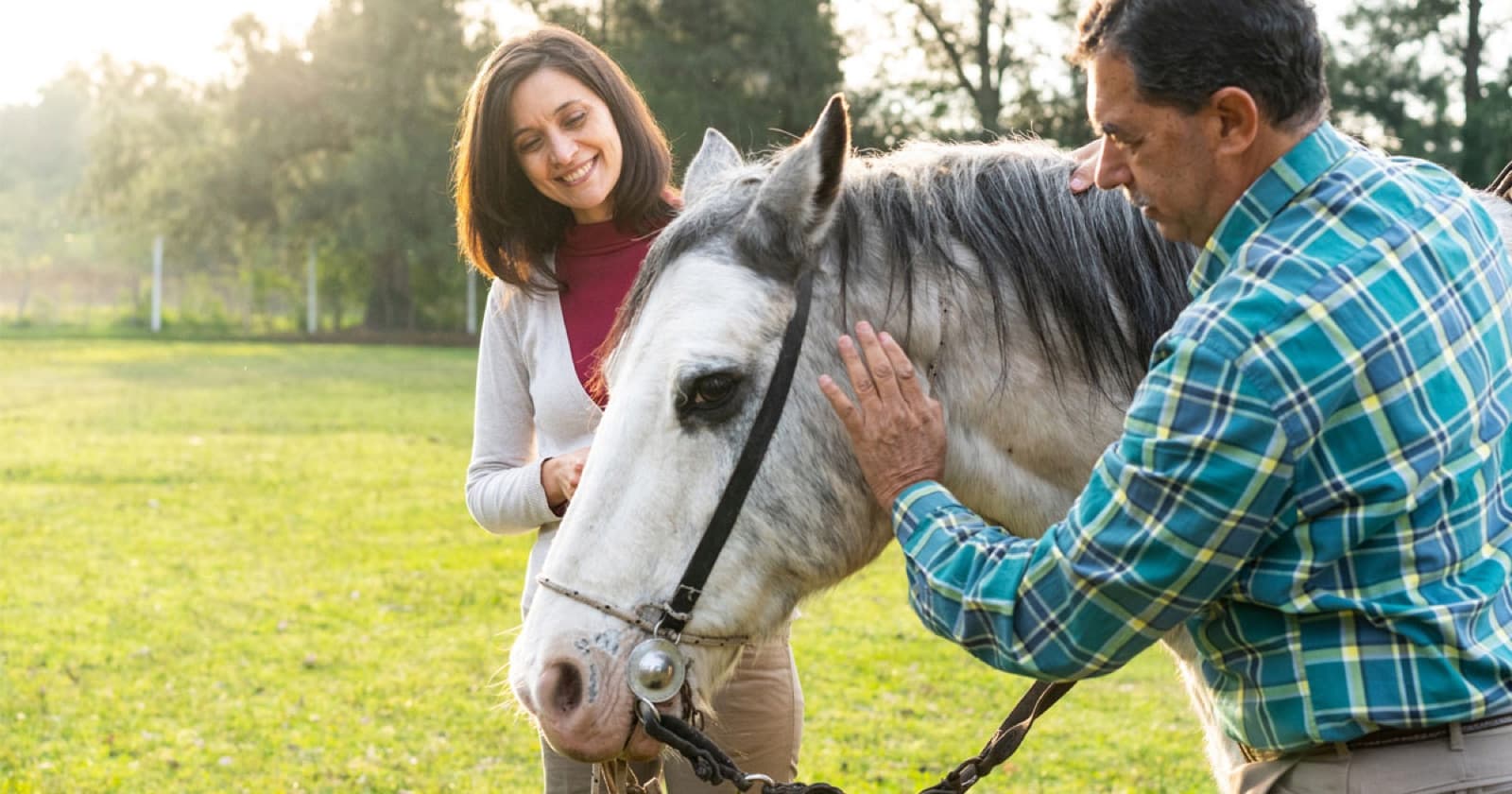
Equine assisted psychology is psychological therapy that involves horses as part of the therapeutic process, delivered by a registered psychologist. Working with horses on the ground can make therapy more accessible for people who find a consulting room difficult — including some participants who struggle with conventional talk-based sessions.
At a glance
- Psychological therapy involving horses, facilitated by a registered psychologist
- Trauma-informed and person-centred - a farm setting rather than a clinic room
- No riding, and no experience with horses needed; the work happens on the ground
- Often suits Complex PTSD, Borderline Personality Disorder, trauma-related conditions and autism
- On a quiet farm in the Hunter Valley, near Cessnock
- Funded like our other psychology, generally through Capacity Building
Watch · 21 seconds
Therapy, out in the paddock
A short animation: a registered psychologist, our horses Friday Sunshine and Zen Ed, and a quiet Hunter Valley farm. No riding needed.
Request a call backRead the transcript
Therapy, out in the paddock.
A registered psychologist works with you alongside our horses, Friday Sunshine and Zen Ed, on a quiet farm in the Hunter Valley.
No riding, and no experience with horses needed.
Care Alliance. Call 1300 206 309.
Psychology, outdoors
Delivered on a peaceful farm in the Hunter Valley, this service is facilitated by one of our experienced registered psychologists and grounded in trauma-informed, person-centred practice.
In a calm, supportive natural environment, participants develop emotional regulation, self-awareness, confidence, resilience and meaningful connection through structured therapeutic engagement with nature and animals.
Meet Friday Sunshine and Zen Ed
Our therapy horses, Friday Sunshine and Zen Ed, play an important role in the therapeutic process. Their calm presence and responsiveness support participants to explore emotional experiences, strengthen coping strategies and work towards meaningful growth and improved wellbeing.
Why the horse changes the session
Equine assisted psychology is not riding, and the horse is not a mascot. Horses respond to what a person is doing physically and emotionally in the moment, and they do it immediately and without social politeness. For someone who finds a consulting room hard — young people especially, and people who have learned to say what adults want to hear — that feedback is often easier to accept from an animal than from a clinician.
The psychological work is still psychological work. Sessions are run by a registered psychologist, with goals, review and documentation like any other therapy. What changes is the setting and the pace: a lot of the useful material comes out sideways, while someone is doing something with their hands, rather than in answer to a direct question.
Common questions
Is this actual psychology, or a recreational activity with horses?
It is psychology. Sessions are facilitated by one of our registered psychologists and grounded in trauma-informed, person-centred practice - the setting is a farm rather than a clinic room, but the work is clinical. That distinction matters, because animal-assisted recreation is a different thing with different funding.
Do I need any experience with horses?
None at all, and you do not need to ride. The work happens on the ground. Friday Sunshine and Zen Ed are chosen for their calm temperament, and how much you interact with them is led by you.
Who is it suitable for?
Participants living with Complex PTSD, Borderline Personality Disorder, trauma-related conditions, Autism Spectrum Disorder and other disabilities. It often suits people who find a clinic room difficult, or who have not got far with talk-based therapy - being outdoors and alongside an animal changes what is possible in a session.
Where does it take place?
On a quiet farm in the Hunter Valley, near Cessnock. It is a calm outdoor setting rather than a clinic, and we will talk through access and what to expect before your first session.
Is equine-assisted psychology funded by the NDIS?
It is funded the same way as our other psychology, generally through capacity building where psychology is in your plan. Requesting the equine program rather than clinic-based sessions does not change the funding category - it changes where the session happens.