
Community access — the NDIS calls it social and community participation — is support from a worker to take part in life outside the home. That might be sport, classes, shopping, volunteering, appointments or seeing friends. It is usually funded from the Core Supports budget, and is built around the participant's own interests rather than a fixed activity program.
At a glance
- Support to take part in life outside the home - the NDIS calls it social and community participation
- Sport, classes, shopping, volunteering, appointments and seeing friends
- Built around your interests and goals rather than a fixed activity list
- You approve every support worker on your team, and we only roster from your approved team
- Your support workers are guided and trained by both our registered nurses and our psychologists
- If you have complex care or mental health needs, a registered nurse or psychologist comes to your free meet and greet
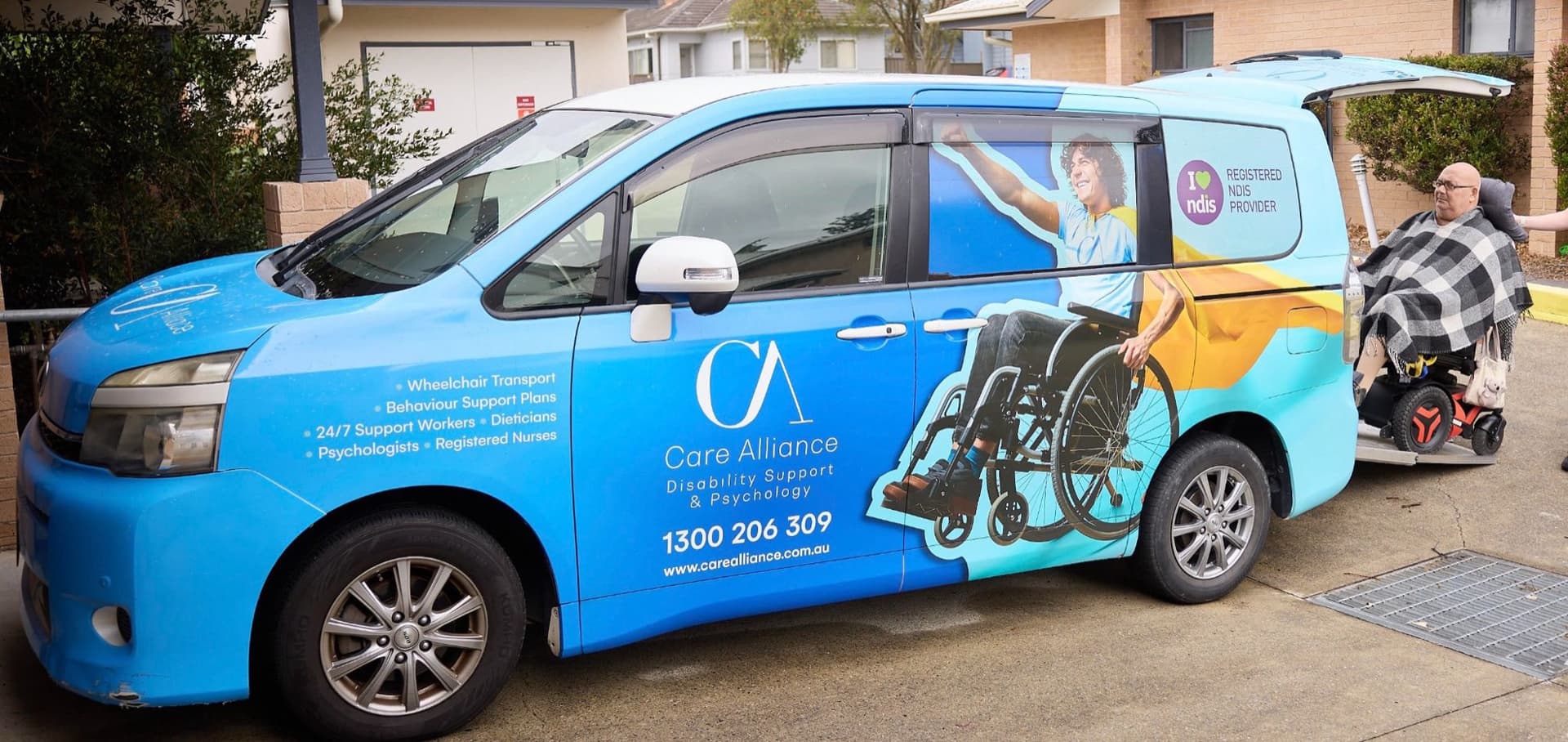
- Thirteen wheelchair-accessible vehicles for participants with mobility needs
- Usually funded from Core Supports, under Assistance with Social and Community Participation
- Transport may be funded separately again, depending on your plan
Watch · 41 seconds
Get out and do more of what you love
A short animation: appointments, the beach, sport, shopping and seeing family and friends, a nurse or psychologist at your meet and greet if you need one, your approved team and our accessible vehicles.
Request a call backRead the transcript
Get out and do more of what you love.
Getting to appointments, sport, classes, shopping, a trip to the beach, volunteering, and seeing family and friends, built around your interests.
Your support team receives clinical guidance and training from both our registered nurses and our psychologists, so your physical and mental health benefit from great support that is backed by evidence.
If you have complex care needs, a registered nurse comes to your free meet and greet. If you have complex mental health needs, a psychologist comes along.
With a team you've approved, and 13 wheelchair-accessible vehicles.
Care Alliance. Call 1300 206 309.
Built around your interests
Our support workers assist participants to engage in a wide range of community-based activities tailored to their interests, preferences and support needs — building confidence, strengthening communication and social skills, and encouraging meaningful participation in community life.
We work collaboratively with participants, families and allied health professionals to ensure supports are individualised, goal-oriented and responsive.
Your approved team
Every Care Alliance client has an approved team: the support workers you have said yes to. You are in control of who is on it, and we only ever roster from your approved team. That way you know the people who are turning up, and they are trained in how best to support you.
How a support worker joins your team:
- First, a call. Our Rosters & Teams department calls you, or your representative, to discuss potential new team members.
- If you approve, a shadow shift comes next. When we are building your team, every new support worker does a shadow shift, and we pay for it. It is at our expense.
- Then you decide. After the shadow shift, our Rosters & Teams department calls you, or your representative, and asks whether you want that worker on your team. The answer can be yes or no, or we can provide more training first. There is never any pressure to have anyone on your team who isn't the right fit for you.
- Only your approved team is rostered. From then on, our rostering team only rosters support workers from your approved team: the team you chose. You only ever have the team you have approved.
Guided by our nurses and our psychologists
Your support team receives clinical guidance and training from both our registered nurses and our psychologists, so your physical and mental health benefit from great support that is backed by evidence.
Watch · 41 seconds
Body and mind, both looked after
Read the transcript
Body and mind, both looked after.
Your support team receives clinical guidance and training from both our registered nurses and our psychologists, so your physical and mental health benefit from great support that is backed by evidence.
If you have complex care needs, a registered nurse comes to your free meet and greet. If you have complex mental health needs, a psychologist comes along.
Our nurses train your team in your health and care needs.
Our psychologists guide them in supporting your wellbeing.
So the people beside you every day know what to do, and why.
Care Alliance. Call 1300 206 309.
- From our registered nurses. Clinical guidance and training for your support workers on your physical health.
- From our psychologists. Clinical guidance and training for your support workers on your mental health.
A nurse or psychologist at your meet and greet
If you have complex care needs, one of our registered nurses comes to your free meet and greet, to plan your clinical care, your nursing oversight and any extra training your support workers will need. If you have complex mental health needs, one of our psychologists comes along. So the right clinical planning starts at your very first meeting.
- Complex care needs. A registered nurse joins your meet and greet to plan your clinical care, your nursing oversight and any extra RN training for your support workers.
- Complex mental health needs. A psychologist joins your meet and greet, so your mental health needs are understood from the start.
Thirteen wheelchair-accessible vehicles
To support safe community participation, Care Alliance operates a fleet of thirteen wheelchair-accessible vehicles, enabling participants with mobility requirements to access the community safely, comfortably and with greater ease.
Auslan-trained workers available
Community access works best when the person beside you can talk with you while you are out. For participants who are Deaf or hard of hearing, we can roster Auslan-trained support workers, including tactile Auslan. Ask our intake team when you call.
The aim is needing us less
Community access is funded to help someone take part in the community, and the measure of whether it is working is usually how much support the same outing needs six months later. Sometimes the answer is the same amount, and that is a legitimate outcome. Often it is less, because the route has become familiar, the staff at the venue know the person, or a skill has been learned along the way.
We plan it that way deliberately. Workers are briefed on what the participant is building toward, not just where they are going, so the support can step back as confidence grows rather than staying at the level it started at out of habit.
Common questions
What is community access under the NDIS?
Community access — sometimes called social and community participation — is support from a worker to get out and take part in life outside your home. That might be sport, shopping, classes, appointments, volunteering, seeing friends, or simply getting to the places you want to go. The point is participation on your terms, not a fixed activity program.
Do I get a say in who supports me?
Yes, you decide. Every client has an approved team. Our Rosters & Teams department first calls you or your representative to discuss potential new team members. If you approve, the support worker does a shadow shift, at our expense. Rosters & Teams then calls again to ask whether you want that worker on your team. The answer can be yes or no, or we can provide more training first, and there is never any pressure to have anyone on your team who isn't the right fit for you. We only ever roster from your approved team, so you know who is turning up and they are trained in how best to support you.
Who guides and trains my support workers?
Both our registered nurses and our psychologists. Your support team receives clinical guidance and training from both, so your physical and mental health benefit from great support that is backed by evidence. Care Alliance is owned and operated by psychologists and has its own in-house team of registered nurses.
Will a nurse or psychologist come to my meet and greet?
If you need them, yes. If you have complex care needs, one of our registered nurses comes to your free meet and greet, to plan your clinical care, your nursing oversight and any extra training your support workers will need. If you have complex mental health needs, one of our psychologists comes along. The meet and greet is free and there is no obligation.
What sort of activities can community access cover?
Whatever genuinely matters to you. Supports are built around your interests, preferences and goals, and commonly include social outings, recreation and sport, community groups and classes, shopping and errands, and getting to appointments — with a focus on building confidence, communication and social connection along the way.
Can you provide transport if I use a wheelchair?
Yes. Care Alliance operates a fleet of thirteen wheelchair-accessible vehicles, so participants with mobility requirements can get out into the community safely and comfortably. Tell our intake team what you need and we will match the right vehicle and worker.
How is community access funded in an NDIS plan?
It generally comes from the Core Supports budget, under 'Assistance with Social and Community Participation'. Transport may be funded separately again depending on your plan. Our intake team will confirm what your plan covers before supports begin.