
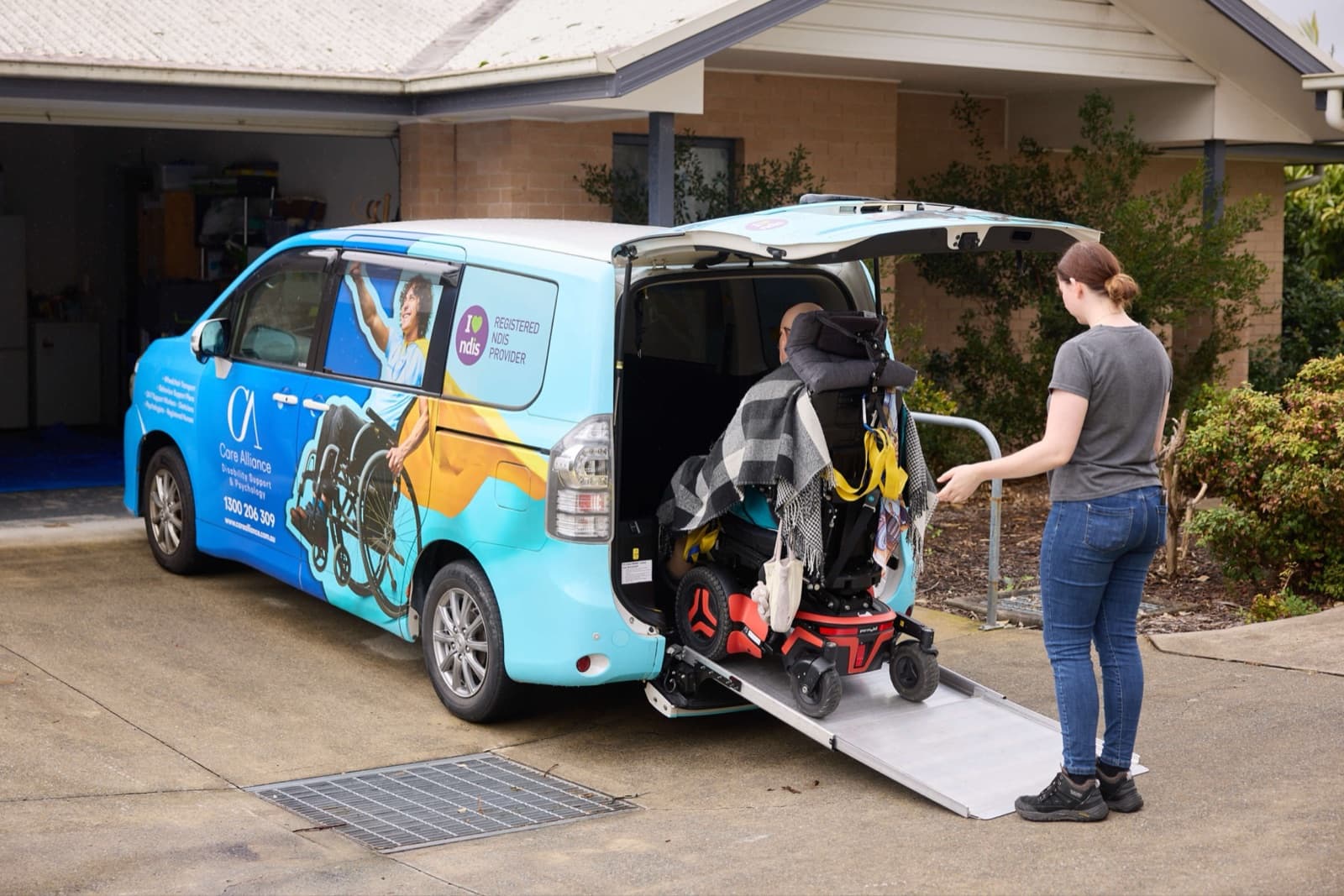
High intensity supports are everyday personal supports that carry enough clinical risk to require specific training, assessed competency and clinical oversight — such as PEG feeding, complex bowel care, tracheostomy care, catheter care, seizure management and complex wound care. The NDIS groups them as High Intensity Daily Personal Activities, or HIDPA.
At a glance
- PEG and enteral feeding, complex bowel care, tracheostomy and ventilator care
- Urinary catheter care, subcutaneous injections and complex wound care
- Epilepsy and seizure management, dysphagia management and diabetes support
- Delivered only by workers trained and assessed as competent for that support and that person
- Registered Nurse oversight on every high intensity support
- You approve every support worker on your team, and we only roster from your approved team
- Your support workers are guided and trained by both our registered nurses and our psychologists
- If you have complex care or mental health needs, a registered nurse or psychologist comes to your free meet and greet
- NDIS-registered for High Intensity Daily Personal Activities (HIDPA)
- Registered under Module 2a to implement regulated restrictive practices
Watch · 25 seconds
Complex care, done properly
A short animation: workers you have approved, trained and signed off by our registered nurses, a nurse overseeing every support, and a nurse or psychologist at your free meet and greet if you need one.
Request a call backRead the transcript
Complex care, done properly.
Delivered only by workers you've approved, and our registered nurses have trained and signed off.
With a registered nurse overseeing every support.
If you have complex care needs, a registered nurse comes to your free meet and greet. If you have complex mental health needs, a psychologist comes along.
Care Alliance. Call 1300 206 309.
A genuinely clinical team
Our multidisciplinary team includes Registered Nurses, Enrolled Nurses, Assistants in Nursing, Psychologists, Behaviour Support Practitioners and highly trained support workers, all working together to deliver high-quality, person-centred care.
Complex clinical needs we support
- Complex bowel care
- Enteral feeding (PEG/PEJ)
- Dysphagia management
- Ventilator and tracheostomy care
- Urinary catheter care
- Subcutaneous injections
- Complex wound care
- Epilepsy and seizure management
- Diabetes support
Your approved team
Every Care Alliance client has an approved team: the support workers you have said yes to. You are in control of who is on it, and we only ever roster from your approved team. That way you know the people who are turning up, and they are trained in how best to support you.
How a support worker joins your team:
Watch · 38 seconds
Your team. Your choice.
Read the transcript
Your team. Your choice.
When someone new could join your support team, our Rosters and Teams department calls you first to talk it through.
If you're happy to meet them, they start with a shadow shift, working alongside someone you already know. We pay for it, not you.
Then you decide. We call you, or your representative, and ask: yes, no, or more training first?
There is never any pressure to have anyone on your team who isn't the right fit for you.
And we only ever roster from the team you've approved. That's why we call it your approved team.
Care Alliance. Call 1300 206 309.
- First, a call. Our Rosters & Teams department calls you, or your representative, to discuss potential new team members.
- If you approve, a shadow shift comes next. When we are building your team, every new support worker does a shadow shift, and we pay for it. It is at our expense.
- Then you decide. After the shadow shift, our Rosters & Teams department calls you, or your representative, and asks whether you want that worker on your team. The answer can be yes or no, or we can provide more training first. There is never any pressure to have anyone on your team who isn't the right fit for you.
- Only your approved team is rostered. From then on, our rostering team only rosters support workers from your approved team: the team you chose. You only ever have the team you have approved.
Guided by our nurses and our psychologists
Your support team receives clinical guidance and training from both our registered nurses and our psychologists, so your physical and mental health benefit from great support that is backed by evidence.
Watch · 41 seconds
Body and mind, both looked after
Read the transcript
Body and mind, both looked after.
Your support team receives clinical guidance and training from both our registered nurses and our psychologists, so your physical and mental health benefit from great support that is backed by evidence.
If you have complex care needs, a registered nurse comes to your free meet and greet. If you have complex mental health needs, a psychologist comes along.
Our nurses train your team in your health and care needs.
Our psychologists guide them in supporting your wellbeing.
So the people beside you every day know what to do, and why.
Care Alliance. Call 1300 206 309.
- From our registered nurses. Clinical guidance and training for your support workers on your physical health.
- From our psychologists. Clinical guidance and training for your support workers on your mental health.
A nurse or psychologist at your meet and greet
If you have complex care needs, one of our registered nurses comes to your free meet and greet, to plan your clinical care, your nursing oversight and any extra training your support workers will need. If you have complex mental health needs, one of our psychologists comes along. So the right clinical planning starts at your very first meeting.
- Complex care needs. A registered nurse joins your meet and greet to plan your clinical care, your nursing oversight and any extra RN training for your support workers.
- Complex mental health needs. A psychologist joins your meet and greet, so your mental health needs are understood from the start.
Module 2a registered
As a registered Module 2a provider, Care Alliance is authorised to implement regulated restrictive practices in line with NDIS requirements and approved Behaviour Support Plans. Our approach is grounded in professionalism, compliance, dignity and respect.
Every staff member delivering high intensity supports completes structured clinical eLearning and competency training, overseen by our nursing team.
How high intensity supports are staffed and supervised
High intensity supports are not simply support work with a harder task attached. They are delivered by workers who hold the relevant high intensity skills for that specific support, working to a plan written by the clinician responsible for it, with a registered nurse involved where the support is nursing-delegated.
That structure exists because the risk sits in the gap between plan and practice. A plan that is written well and applied inconsistently is not a safe plan. So the same organisation that writes the support also trains the workers delivering it, supervises them and reviews how it is actually going — and our 24/7 on-call team means a worker facing something unexpected at 2am has a clinician to call rather than a guess to make.
Common questions
What is HIDPA?
High Intensity Daily Personal Activities is the NDIS registration group covering supports with higher clinical risk — such as PEG feeding, complex bowel care or seizure management — which must be delivered by appropriately trained workers under clinical oversight.
Which supports count as high intensity?
Supports carrying enough clinical risk that ordinary personal care training is not enough on its own. Commonly: enteral (PEG) feeding, tracheostomy care, complex bowel care, urinary catheter care, ventilation support, subcutaneous injections, severe dysphagia support, seizure management and complex wound care. If you are unsure whether your situation counts, our nursing team can tell you.
Who is allowed to deliver high intensity supports?
Workers who have been trained and assessed as competent for that specific support and that specific person, working under clinical oversight — not simply anyone rostered on. At Care Alliance every staff member delivering high intensity supports completes structured clinical eLearning and competency training overseen by our nursing team, and Registered Nurses maintain oversight of the support.
Do I get a say in who supports me?
Yes, you decide. Every client has an approved team. Our Rosters & Teams department first calls you or your representative to discuss potential new team members. If you approve, the support worker does a shadow shift, at our expense. Rosters & Teams then calls again to ask whether you want that worker on your team. The answer can be yes or no, or we can provide more training first, and there is never any pressure to have anyone on your team who isn't the right fit for you. We only ever roster from your approved team, so you know who is turning up and they are trained in how best to support you.
Who guides and trains my support workers?
Both our registered nurses and our psychologists. Your support team receives clinical guidance and training from both, so your physical and mental health benefit from great support that is backed by evidence. Care Alliance is owned and operated by psychologists and has its own in-house team of registered nurses.
Will a nurse or psychologist come to my meet and greet?
If you need them, yes. If you have complex care needs, one of our registered nurses comes to your free meet and greet, to plan your clinical care, your nursing oversight and any extra training your support workers will need. If you have complex mental health needs, one of our psychologists comes along. The meet and greet is free and there is no obligation.
What is Module 2a, and why does it matter?
Module 2a is the NDIS registration module covering the implementation of regulated restrictive practices. Care Alliance is a registered Module 2a provider, which means we are authorised to implement regulated restrictive practices where they are required — only ever in line with an approved Behaviour Support Plan and NDIS Commission requirements. In practice it matters because a provider without it cannot lawfully deliver supports for some participants with complex needs.