
Hospital discharge support helps someone move from a hospital bed back to living at home safely. It typically means nurse-led planning before discharge, setting up the clinical care and equipment needed at home, briefing the support team, and being there in the first days and weeks when things are most likely to come unstuck.
At a glance
- Nurse-led planning before discharge, not after it
- Clinical care and equipment set up at home before you leave
- The support team briefed, and there through the first days and weeks
- Our Registered Nursing Leads attend discharge planning at Rankin Park, John Hunter Hospital
- Registered for High Intensity Daily Personal Activities and approved under Module 2a
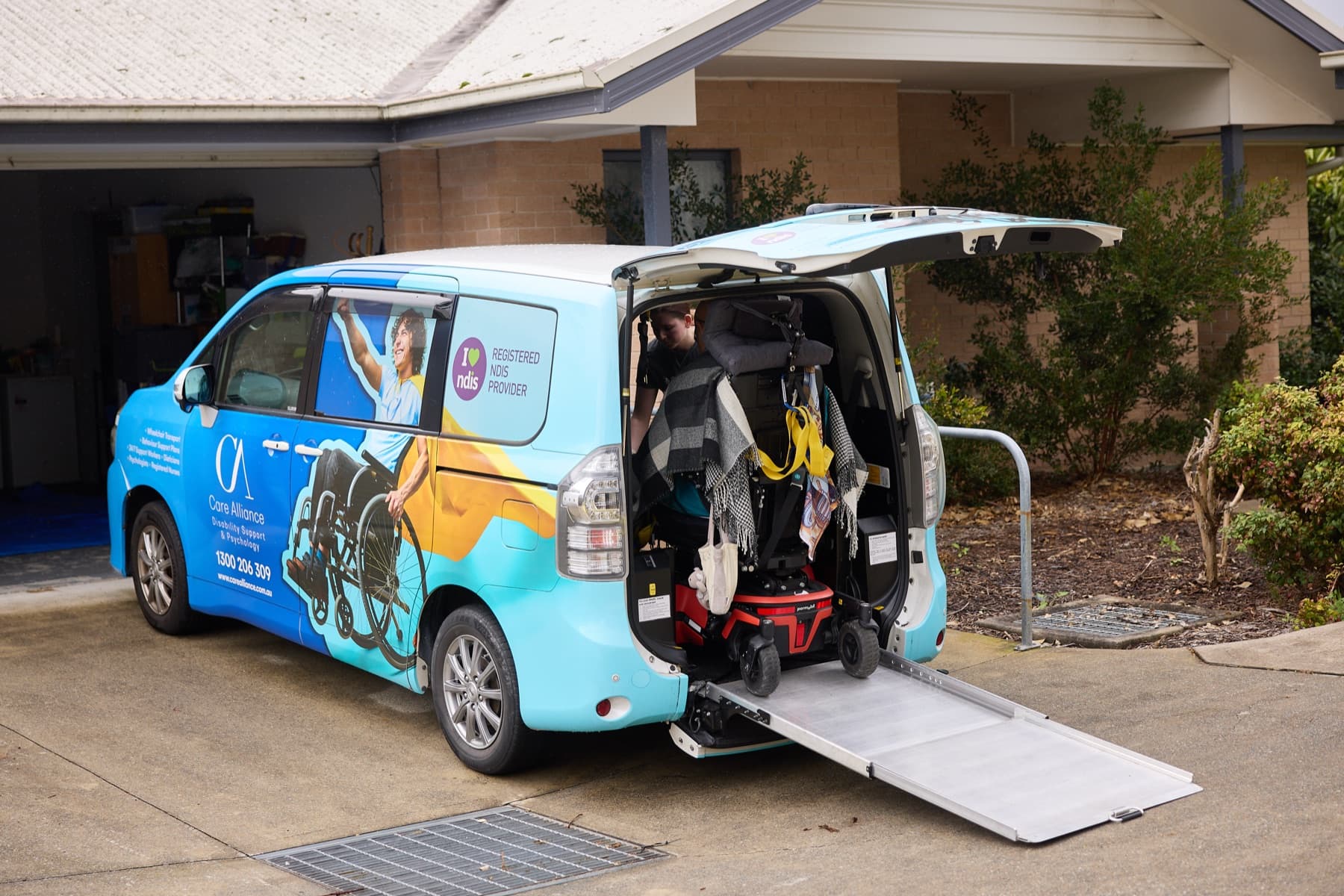
- Transport home, and to appointments afterwards, in our wheelchair-accessible vans
- Best to contact us while discharge is still being discussed, not once a date is set
Our registered nurses are in the room
Every discharge we support includes one of our Registered Nursing Leads in the planning meetings at Rankin Park, John Hunter Hospital. Not a coordinator taking notes to pass along afterwards — a registered nurse hearing the clinical picture first-hand from the people treating it.
Discharge planning is where the detail lives: wound management, PEG feeding, catheter care, seizure protocols, medication changes, the equipment someone goes home with, and the early signs that mean somebody needs to call for help. Second-hand summaries lose exactly that detail, and it is the detail that keeps people safe at home.
Nurse to nurse, so nothing is lost in translation
When Hunter New England Health nursing staff hand over to a registered nurse rather than to a non-clinical staff member, both sides are speaking the same clinical language. Questions get asked and answered properly while everyone is still in the room, and the plan that leaves the hospital is the plan that gets delivered at home.
That continuity is the entire point. The clinical reasoning behind a person's care travels with them, instead of being reconstructed from scratch once they are through their own front door.
Our nurses lead the transition, not just the paperwork
Our registered nurses write the care plan from what they heard in the hospital, train the support workers who will deliver it, and stay involved while the person settles. The training is built around one individual's needs, not delivered as a generic course and hoped to fit.
The result is evidence-based care that holds its standard on both sides of the discharge — in the hospital, and in the community afterwards.

Registered for high intensity support
Care Alliance is an NDIS-registered provider approved to deliver High Intensity Daily Personal Activities, and approved under Module 2a. That registration is what allows us to take on the most clinically complex discharges rather than only the straightforward ones.
It also means the clinical oversight does not stop once someone is home. Our registered nurses supervise the supports that follow, and our 24/7 on-call team includes RN support, so families and staff can reach clinical guidance at any hour.
An allied health team behind every support worker
Our registered nurses, psychologists, occupational therapists, behaviour support practitioners and physiotherapists are all in-house, and they train our support worker teams directly.
It means the worker in someone's home is delivering care shaped by the clinicians who actually assessed them — whatever the diagnosis, and however complex the needs.
Transport is never the reason a discharge stalls
We run thirteen wheelchair-accessible vans. Getting someone home from hospital, and to every appointment after that, is something we schedule rather than something a family has to solve.
Common questions
Which hospitals do you work with?
Our discharge work centres on Rankin Park at John Hunter Hospital, where our Registered Nursing Leads attend planning meetings. We also support discharges from other hospitals across Newcastle, Lake Macquarie, Maitland and Port Stephens — call us and we will tell you what we can put in place.
When should we contact you about a discharge?
As early as possible, ideally while discharge planning is still being discussed rather than once a date is set. The earlier our nurse is in the room, the more of the clinical picture we can carry into the community, and the more time there is to train the team who will deliver it.
Can you support someone with high or complex clinical needs?
Yes. We are NDIS-registered for High Intensity Daily Personal Activities and approved under Module 2a, with registered nurses providing clinical oversight of every support we deliver.
Who trains the support workers?
Our own clinicians. Registered nurses lead the clinical training, and our allied health team — psychologists, occupational therapists, behaviour support practitioners and physiotherapists — contribute to it, so what a worker is taught reflects the person they are supporting.
Do you provide the transport home from hospital?
Yes. We have thirteen wheelchair-accessible vans and experienced support staff, so transport home and to appointments afterwards is part of what we arrange.