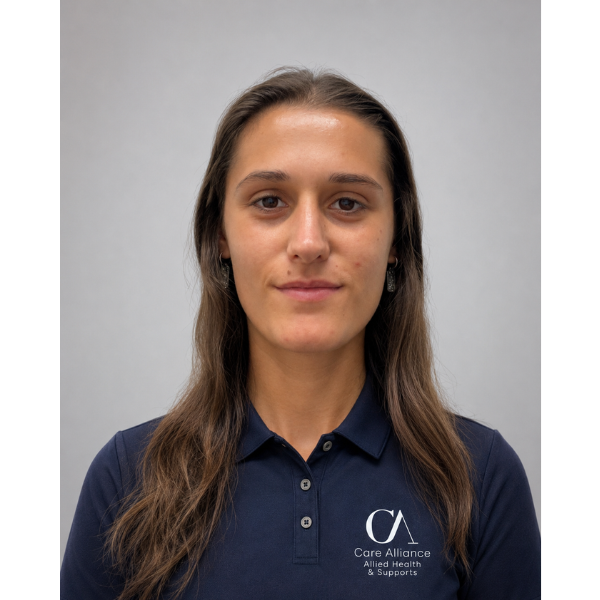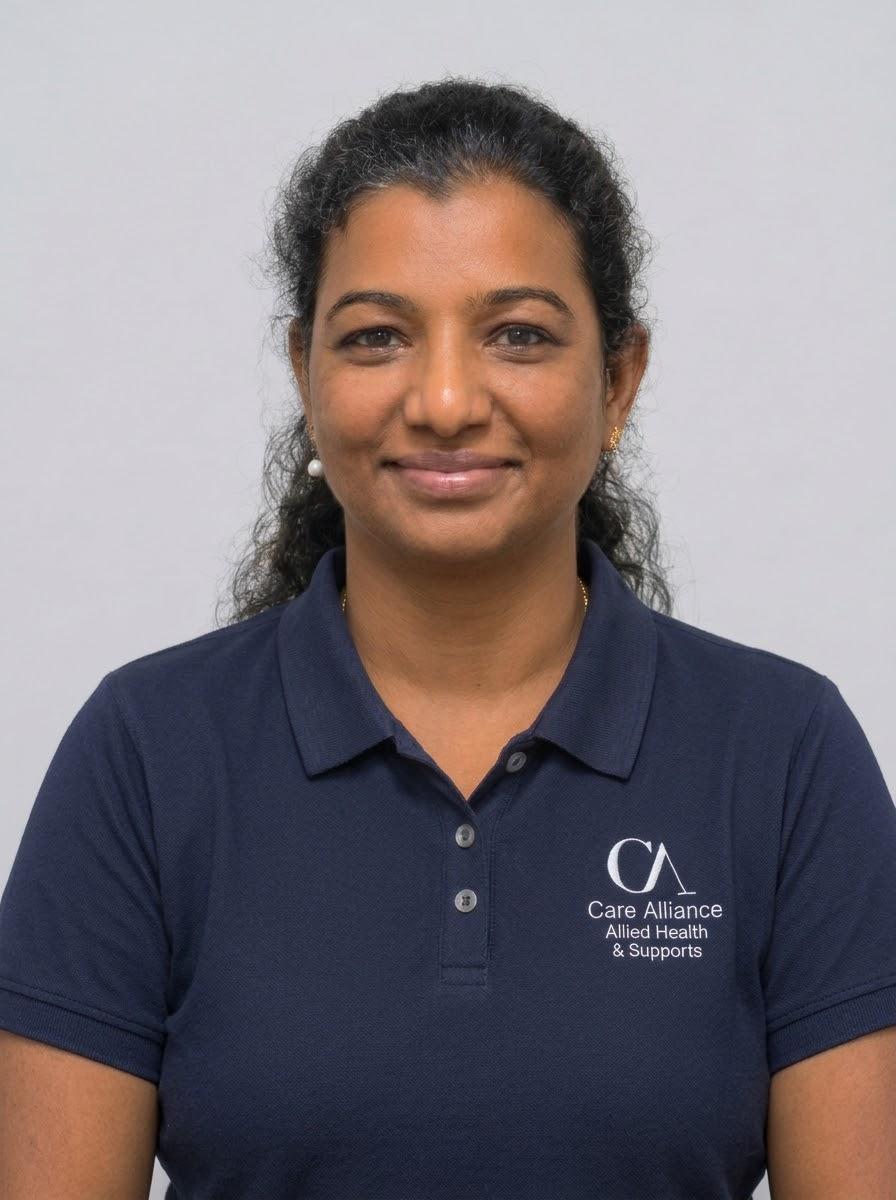

Paediatric occupational therapy helps children build the everyday skills they need at home, at play and in the community: self-care, routines, regulation and movement. A paediatric OT looks at what gets in the way of an everyday task and works with the child and family on skills, strategies and, where needed, equipment.
At a glance
- A particular focus of the occupational therapy team at Care Alliance, a registered NDIS provider
- Three full-time occupational therapists from 23 November 2026, taking new referrals now
- For children from 3 years old
- Self-care, routines, sensory and regulation strategies, and fine and gross motor skills
- At home, at pre-school or day care, at school and in the community, or at our Charlestown clinic if it suits you, with telehealth for family coaching and reviews
- Each child is matched with the OT who suits them, so there is real rapport
- Works alongside our psychologists, behaviour support practitioners and nurses where they are part of your child's support
- No GP referral needed for NDIS-funded occupational therapy
- Across Newcastle, Lake Macquarie, Maitland, Cessnock, Port Stephens and the Central Coast
Taking new OT referrals now
Our occupational therapy team is growing to three full-time occupational therapists, with the third starting on 23 November 2026, and we are taking new OT referrals now. Our OTs work with children from 3 years old and with adults, at home, at school, in SIL homes and in the community, across Newcastle, Lake Macquarie and the Hunter. That includes functional capacity assessments and paediatric occupational therapy.
Call 1300 206 309 or send an enquiry from this page, and our intake team will talk through what you need and when your OT can start. Updated 8 November 2026.
Current capacity across all our servicesWhat paediatric occupational therapy can help with
We work with children and their families on the everyday skills that matter, starting from what your family wants to be easier:
- Self-care, such as dressing, eating and getting ready for the day
- Routines, including mornings, bedtimes and moving from one activity to the next
- Sensory and regulation strategies, for children who find noise, touch or busy places hard to manage
- Fine motor skills, such as using utensils, buttons and drawing
- Gross motor skills, such as balance, coordination and joining in active play
Matched to the right OT
We don't limit occupational therapy to a list of conditions. Our intake team matches each client with the occupational therapist who suits them, so there is a positive relationship and real rapport as well as the right skills. Who you work with matters as much as what you work on.
Therapy where your child's day happens
Our occupational therapists mostly come to your home, your child's pre-school, day care or school, and into the community, because that is where routines, self-care, learning and play actually happen, and where a strategy has to work. If it suits your family better, sessions can be at our Charlestown clinic.
Parents and carers are part of the therapy. Your child's OT shows you what to practise between sessions, and telehealth works well for coaching a family through a strategy, reviewing progress and solving something that has come up between visits.
One team around your child
Your child's OT works alongside our psychologists, behaviour support practitioners and nurses where they are part of your child's support, so everyone works towards the same goals rather than giving the family three different sets of advice.
If your child needs evidence for their NDIS plan, our OTs also complete functional capacity assessments.
How to get started
- You, a family member, a support coordinator or another professional contacts us. No GP referral is needed for NDIS-funded occupational therapy.
- Our intake team talks through what your child needs, your area, and how your plan can fund it.
- Your child's OT starts with an initial assessment and agrees clear goals with your family.
- Therapy happens at home, at pre-school or day care, at school and in the community, with strategies for the days in between.
- Progress, and any evidence for equipment or your child's plan, is written up for the NDIS.
The NDIS and young children
For children younger than 9, the NDIS early childhood approach, delivered by early childhood partners, is often the first step, and a diagnosis is not always needed to get started. If your child already has an NDIS plan, occupational therapy is usually funded from the Capacity Building budget, under Improved Daily Living.
Fees, funding and plan management
Care Alliance is a registered NDIS provider, so our occupational therapists can work with participants whose plans are agency-managed (NDIA-managed), plan-managed or self-managed.
Occupational therapy is usually funded from the Capacity Building budget, under Improved Daily Living. We charge the standard NDIS rate in the current NDIS Pricing Arrangements and Price Limits, and never more, however your plan is managed. Your OT explains up front how time will be split between face-to-face therapy and report writing, so there are no surprises against your budget.
Equipment and home modifications that an OT recommends are usually funded from the Capital budget, once the NDIS accepts the evidence. No GP referral is needed for NDIS-funded occupational therapy.
Common questions
Do you have availability for NDIS occupational therapy?
Yes. Our team is growing to three full-time occupational therapists, with the third starting on 23 November 2026, and we are taking new OT referrals now, including functional capacity assessments and paediatric occupational therapy. Our OTs work at home, at school, in SIL homes and in the community. Call 1300 206 309 or enquire online, and our intake team will confirm when your OT can start.
Where do paediatric OT sessions happen?
At home, at pre-school or day care, at school and in the community, because that is where your child's routines, learning and play happen. Sessions can also be at our Charlestown clinic if that suits your family. Telehealth suits family coaching, reviews and problem-solving between visits.
Can parents join paediatric OT sessions?
Yes. Parents and carers are part of the therapy. Your child's OT shows you what to practise between sessions, so progress does not stop when the OT leaves.
Can an OT help with sensory processing and regulation?
Yes. Sensory and regulation strategies are part of the paediatric occupational therapy our team provides, alongside self-care, routines and motor skills.
Does my child need a diagnosis to see an occupational therapist?
Not to talk to us. For children younger than 9, the NDIS early childhood approach can help families get started, and a diagnosis is not always needed. If your child has an NDIS plan, our intake team will talk through how it can fund occupational therapy.
Do your OTs work with your psychologists and behaviour support practitioners?
Yes. Your child's OT works alongside our psychologists, behaviour support practitioners and nurses where they are part of your child's support, so the family gets one plan rather than separate advice from separate providers.
Can you see agency-managed NDIS participants for OT?
Yes. Care Alliance is a registered NDIS provider, so our occupational therapists can work with agency-managed (NDIA-managed), plan-managed and self-managed participants.